Implementation in 2021 – Zirl:
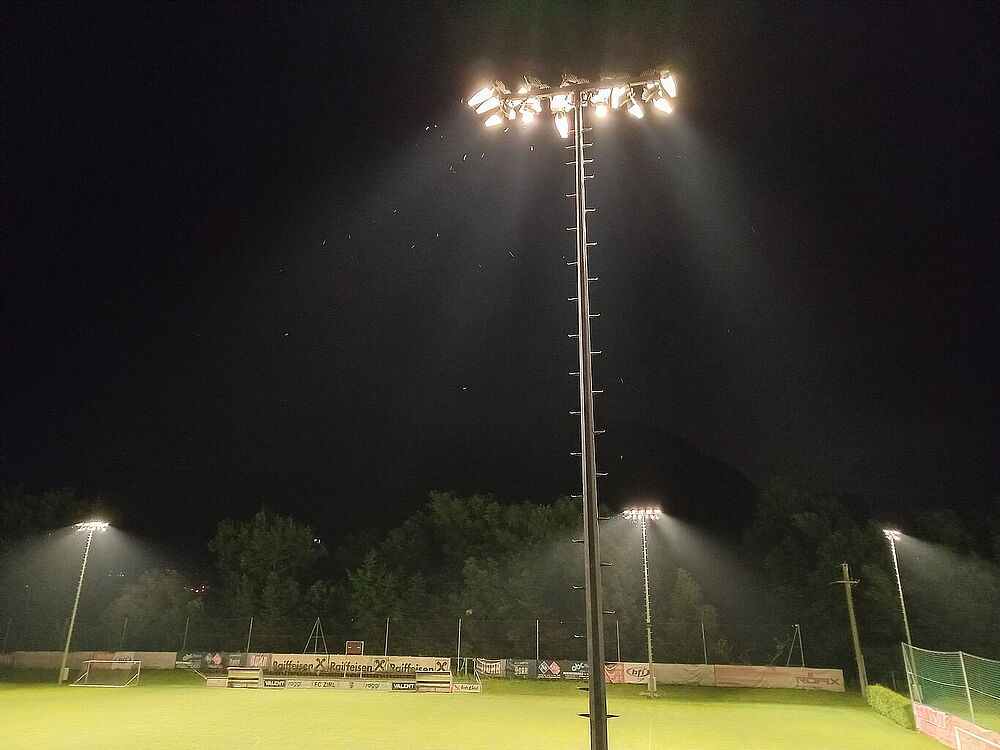
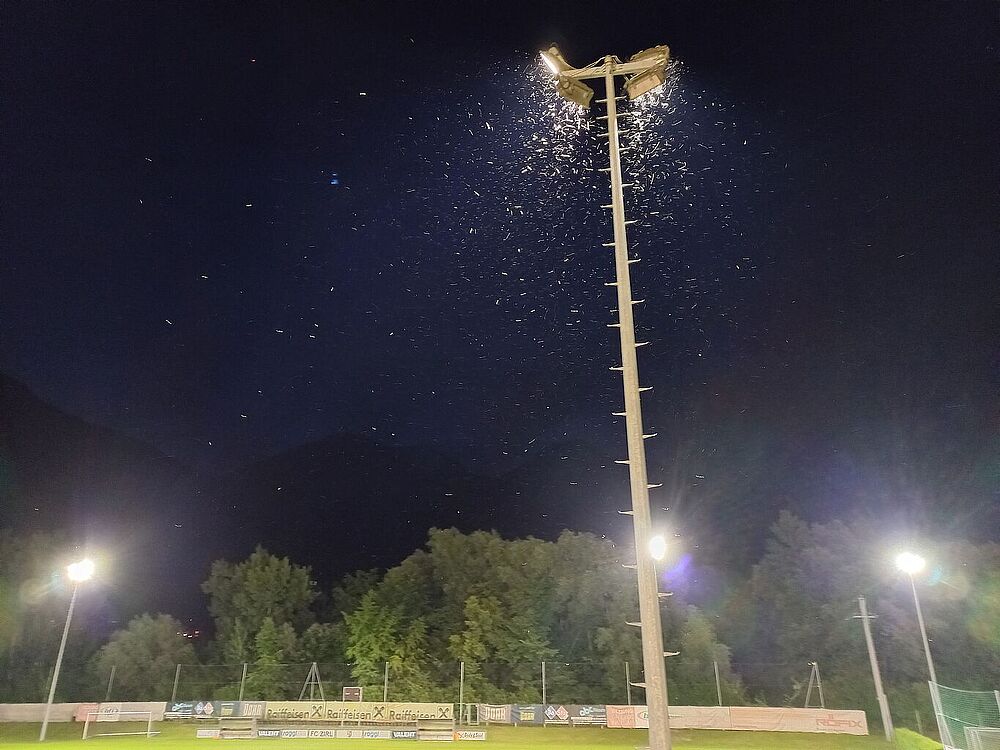
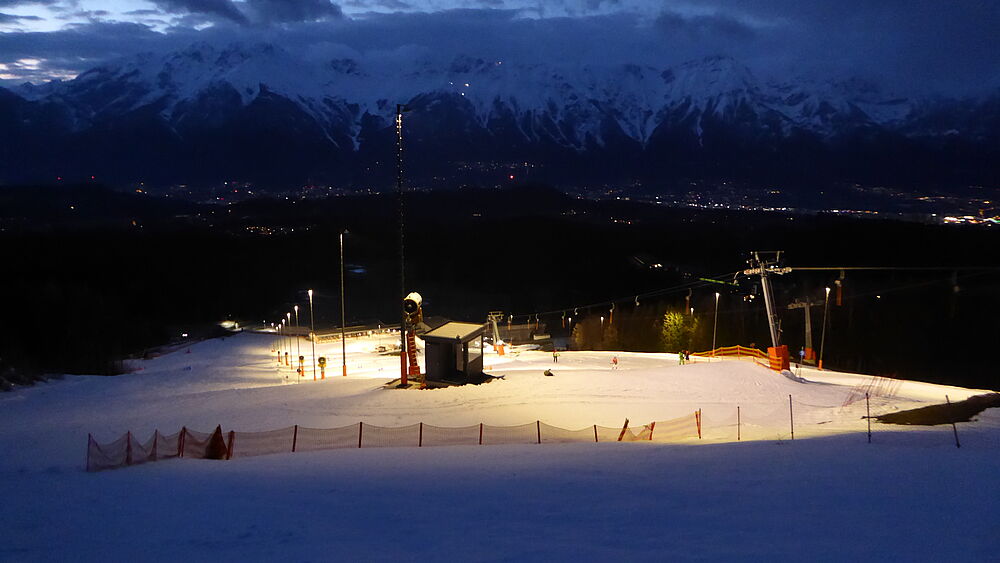
At the football ground in Zirl, the existing metal halide floodlights have been replaced with LED floodlights. The average horizontal illuminance on the main pitch is 200 lux. The light colour of the new LED system is warm white (3000 Kelvin), and the light source height is 18 metres. Matches are played as normal until 10.00 pm at the latest.
The lighting system was measured before and after the retrofit. The new, targeted lighting has resulted in a significant reduction in light pollution at the edge of the woodland, which is located approximately 14 metres from the edge of the pitch. The luminance images show that the edge of the riparian forest was artificially brightened by the old system to 40-50 lux. Following the conversion, an average illuminance of 4-5 lux can be observed. The measured illuminance values in the area of the adjacent woodland have been reduced by 45-90 per cent.
The system was designed by Visium 3 GmbH and implemented by SP-TEC GmbH using the Smart Arena product from Preworks GmbH.
Implementation in 2018 – Wattens:
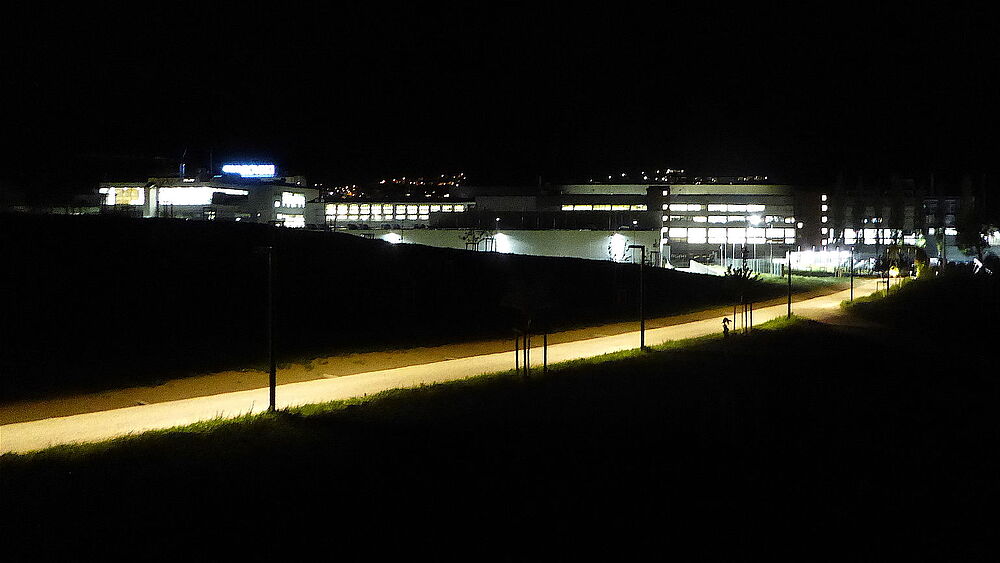
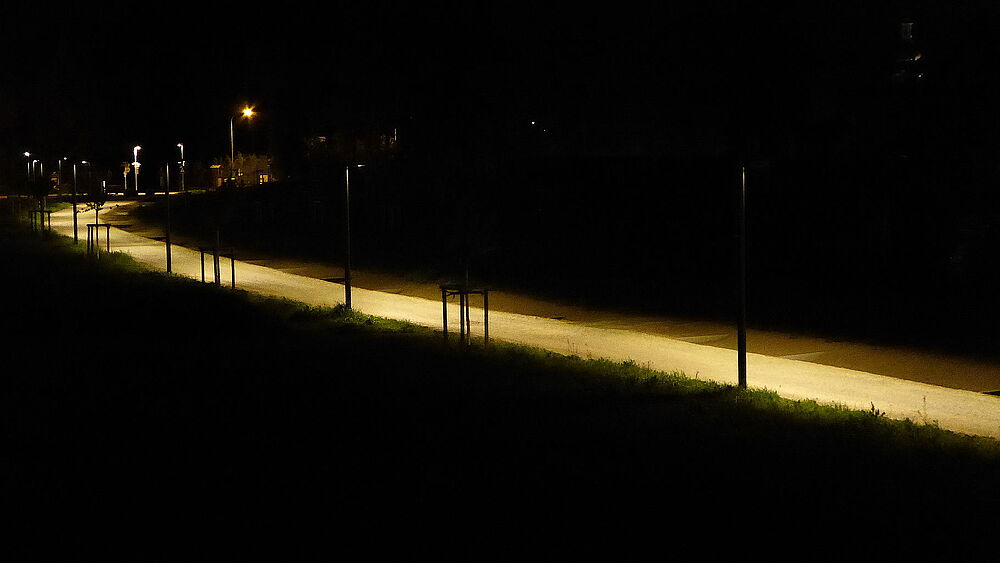
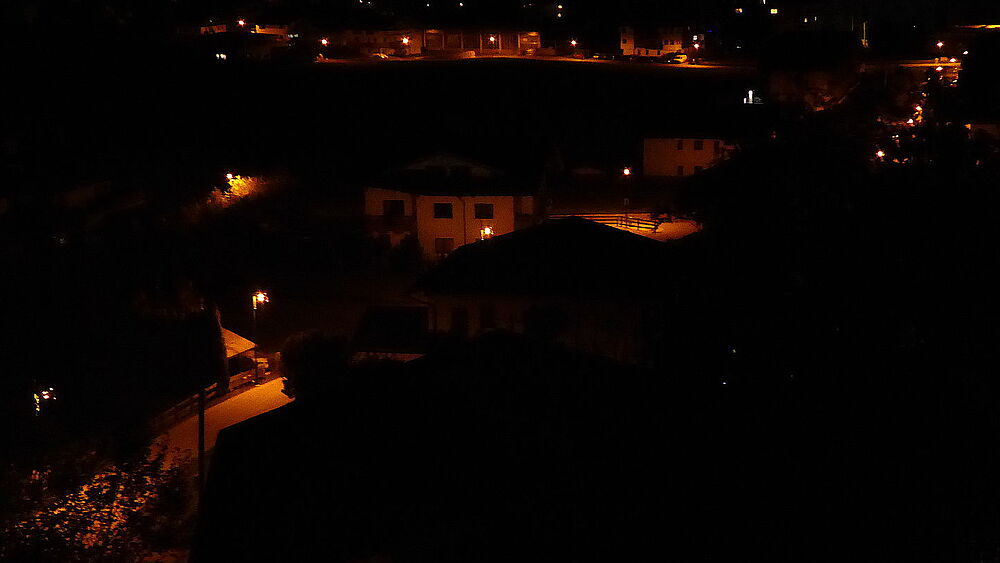
A path runs through a newly created park/orchard on the outskirts of the village, illuminated by 4-metre-high technical luminaires. The luminaires are fitted with LEDs with a colour temperature of 2700 Kelvin.
The light distribution of the luminaires appears to be good. In accordance with the standards (ÖNORM 1055, ÖNORM EN 13201), the system is operated until midnight at an average horizontal illuminance of approximately 5.8 lx; from midnight onwards, it switches to a reduced mode with an average of approximately 3.2 lx.
The lighting for the cycle path and footpath was installed by ewo GmbH, with the project coordinated by D. Swarovski KG.
Implementation 2017 – Igls:
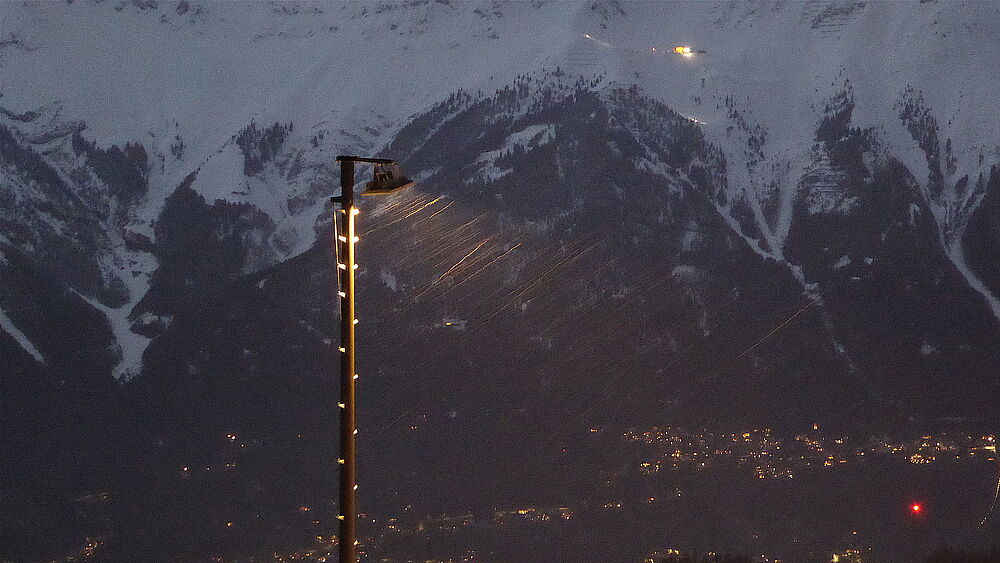
The Heiligwasserwiese in the Patscherkofel ski area is possibly the first ski slope to use LED floodlights emitting warm white light (3000 Kelvin).
According to the lighting design calculations, the system was designed to provide an average horizontal illuminance of 30 lux. The floodlights have been positioned so that only the runway is illuminated. The shielded luminaire type is clearly visible in the photograph. The light source height is 18 metres.
Public skiing sessions take place three times a week (Tuesdays, Wednesdays and Thursdays) from 5.00 pm to 7.00 pm during the winter season (mid-December to the end of March).
The lighting system was designed and installed by Innsbrucker Kommunalbetriebe AG; it was supplied by ewo GmbH.
Introduction of amber LEDs from 2017 – Kaltenbach in the Zillertal:
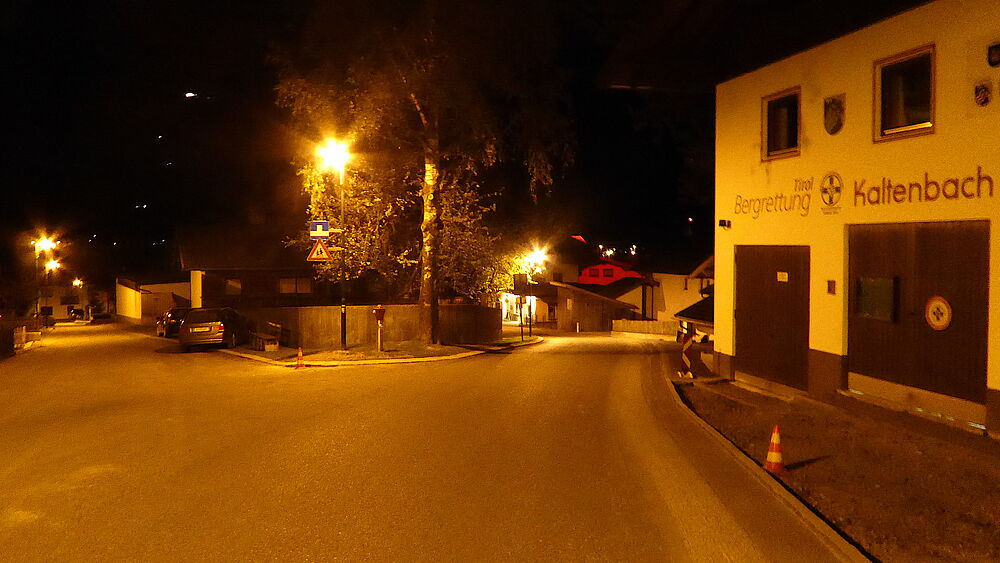
Since 2005, the night-time streetscape of the municipality of Kaltenbach has been characterised by the subdued light of high-pressure sodium vapour lamps. To ensure that the uniform appearance of the townscape is not disrupted, amber-coloured LEDs with a colour temperature of approximately 2200 Kelvin have been used since 2017 as part of renovation and expansion works – for example, in the village centre. Kaltenbach was thus the first municipality in Austria to use amber LEDs for street lighting.
This type of luminaire is decorative and provides upward light shielding; however, the luminaires do not comply with the full cut-off standard. The light point height is 4 metres.
Twilight sensors regulate the required switch-on time; the lights switch off at 6:00 am. A rough measurement of the average horizontal illuminance on the carriageway yielded a figure of around 7.5 lux (April 2019). A dimming mode is in operation during the quieter night-time hours.
The street lighting in the municipality was installed by Innsbrucker Kommunalbetriebe AG and AE Schréder GmbH.
Implementation in 2015 – Hall in Tirol:
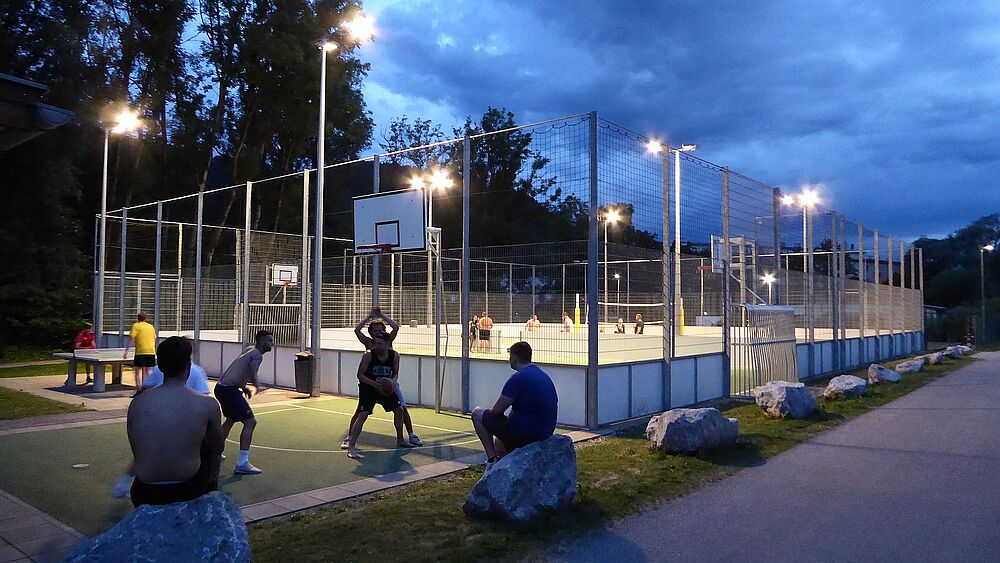
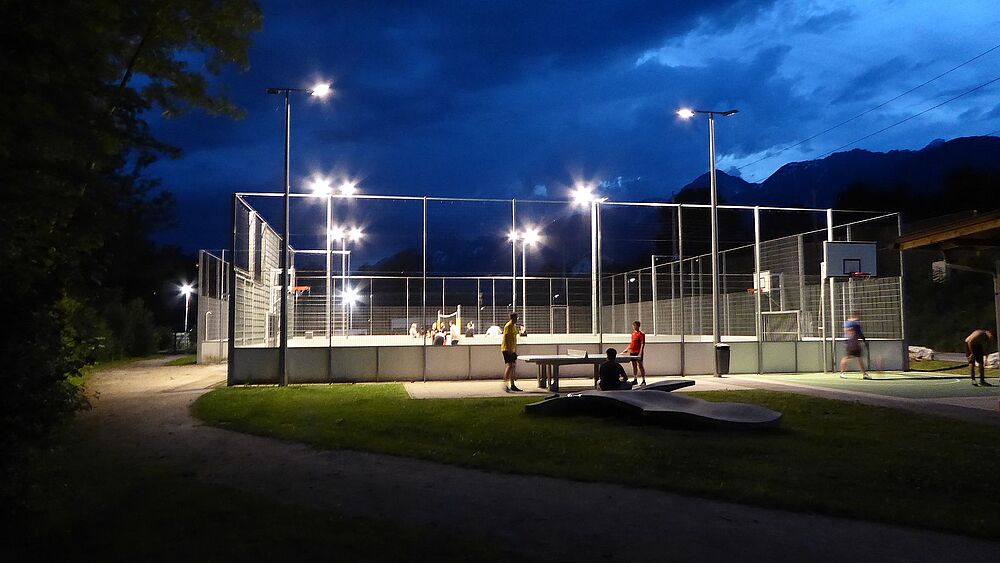
The sports ground was built to enhance nearby residential areas and comprises several small playing fields (volleyball, street football, street basketball, etc.).
It is lit by LED spotlights (light source height 8 metres) with a warm white colour temperature of 3000 Kelvin. According to the project documentation, the average horizontal illuminance is around 124 lux. This lighting calculation is a maximum design and can be manually adjusted to lower values by means of dimming. According to the ÖISS Lighting Guide, values of 75 lux are sufficient for small playing fields.
Originally, the lights were scheduled to switch off at 22:00. Due to incidents of vandalism, artificial lighting is now only used in exceptional cases.
The lighting system was installed by LIPRO Lichtprojekte Elektrotechnik GmbH, with the project coordinated by the engineering firm hopi-sportplan.